.png?width=140&height=140&name=780%20(8).png "780 (8)")
Workshop 01
NJSN School
NJSN School Quick Facts
-
The Numbers
-
45 students participated.
-
45% improvement in their understanding of climate terms.
-
100% engagement: Every single student finished a "Green City" sketch.
-
2-hour session: This gave us double the time for creative work.
Our Main Takeaways
-
Local is better: These students care more about air quality and urban heat than global statistics.
-
Time matters: The extra hour allowed kids to move from "learning the words" to "solving the problems."
-
Urban focus: We realized we need more tools specifically for kids living in concrete-heavy cities like Kathmandu.
What’s Next?
-
We are collecting their urban garden sketches to show other schools how city kids can lead the way in climate adaptation.
-
2 Hours with 45 Students in the Heart of Kathmandu
Koteshwor is one of the busiest, dustiest parts of Kathmandu, and the students at NJSN School live that reality every day. We spent two hours with 45 students to see if we could turn their daily frustrations with heat and pollution into a real understanding of climate action.
What We Noticed: Urban Kids See Things Differently
Usually, when you talk about climate change, kids think of melting ice or polar bears. But at NJSN, the kids immediately talked about the dust on their school blazers and how hot their classrooms get in May. Because we had two full hours, we didn't have to rush. The first hour was spent playing with our climate UNO cards and SDG flashcards to get the basics down. The second hour was the real eye-opener. We asked them to imagine a "Koteshwor of the Future." Instead of just drawing trees, these kids were sketching rooftop gardens on concrete buildings and ways to catch rainwater from their school roof. They aren't just thinking about nature; they are thinking about how to fix their city.
The Results: It’s Working
We saw a 45% jump in their quiz scores from the start of the session to the end. That is a huge leap for just 120 minutes. It shows that when you stop lecturing and start playing, the information actually sticks. By the end, almost every student could explain what SDG 13 (Climate Action) meant for their own neighborhood. They went from feeling like "the weather is just bad" to "we can actually design a better city."
Activity-Based Learning
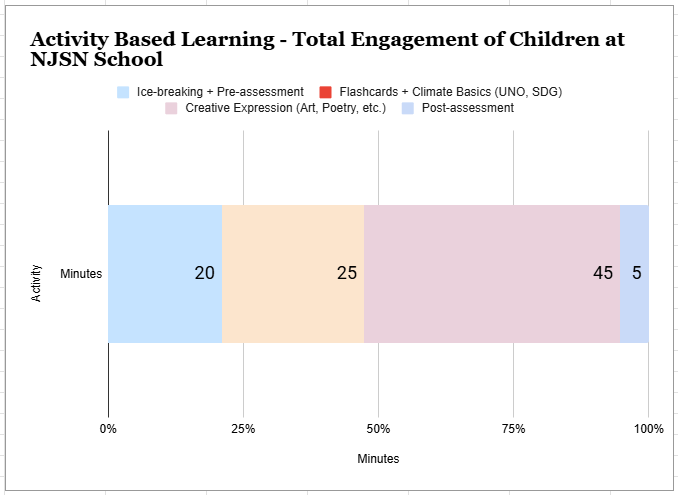
Student's Enagagement with Us
We believe in 'Deep Play.' We spend the most time on creativity because that’s when a child stops being a witness to the crisis and starts becoming a designer of the solution.
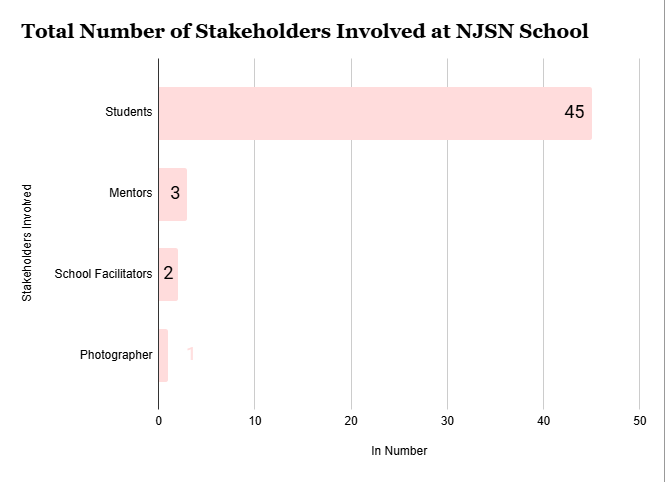
Stakeholders Involved
It takes more than just a teacher. It takes mentors, facilitators, and a community to create a safe space where big ideas can grow.